Stay in the loop!
Get the latest industry insights delivered straight to your inbox
Tony Janega
Food labeling is easy to underestimate because it looks like such a small part of the work, even though it plays a larger role in back-of-house efficiency than many operators may realize.
A label is printed, applied to a container, and carried with that product as it moves to the cooler, prep table, grab-and-go case, commissary shelf, or service line. Compared with labor planning, food costs, safety procedures, and speed of service, labeling can seem like a minor step in the larger operation.
In a working kitchen, small steps are often where the operation either holds together or starts to drift. Efficient kitchens depend on the clear movement of food, people, and information, and labeling sits directly at that intersection. It tells the next person what an item is, when it was made, when it should be used, where it belongs, and whether it is still within standard. In some workflows, it also carries allergen details, pricing, barcodes, customer-facing information, production data, or destination details.
That makes labeling more than a compliance task or a printing task. It is part of the information system of the kitchen.
When that information is clear, consistent, and easy to produce, teams can keep moving. When it is handwritten, incomplete, inconsistent, or disconnected from the rest of the operation, the team has to work around it. Someone checks twice, asks a manager, remakes product because the cooler information is hard to trust, discards something early because the date is unclear, or relabels containers after the work is already done.
In the moment, those actions can feel like normal kitchen problem-solving. Across a full day, multiple shifts, and several locations, they become operational drag.
That’s where labeling starts to affect food operation efficiency in ways that are easy to overlook.
Labeling matters most at the points in the day when someone else has to pick up the work and keep moving.
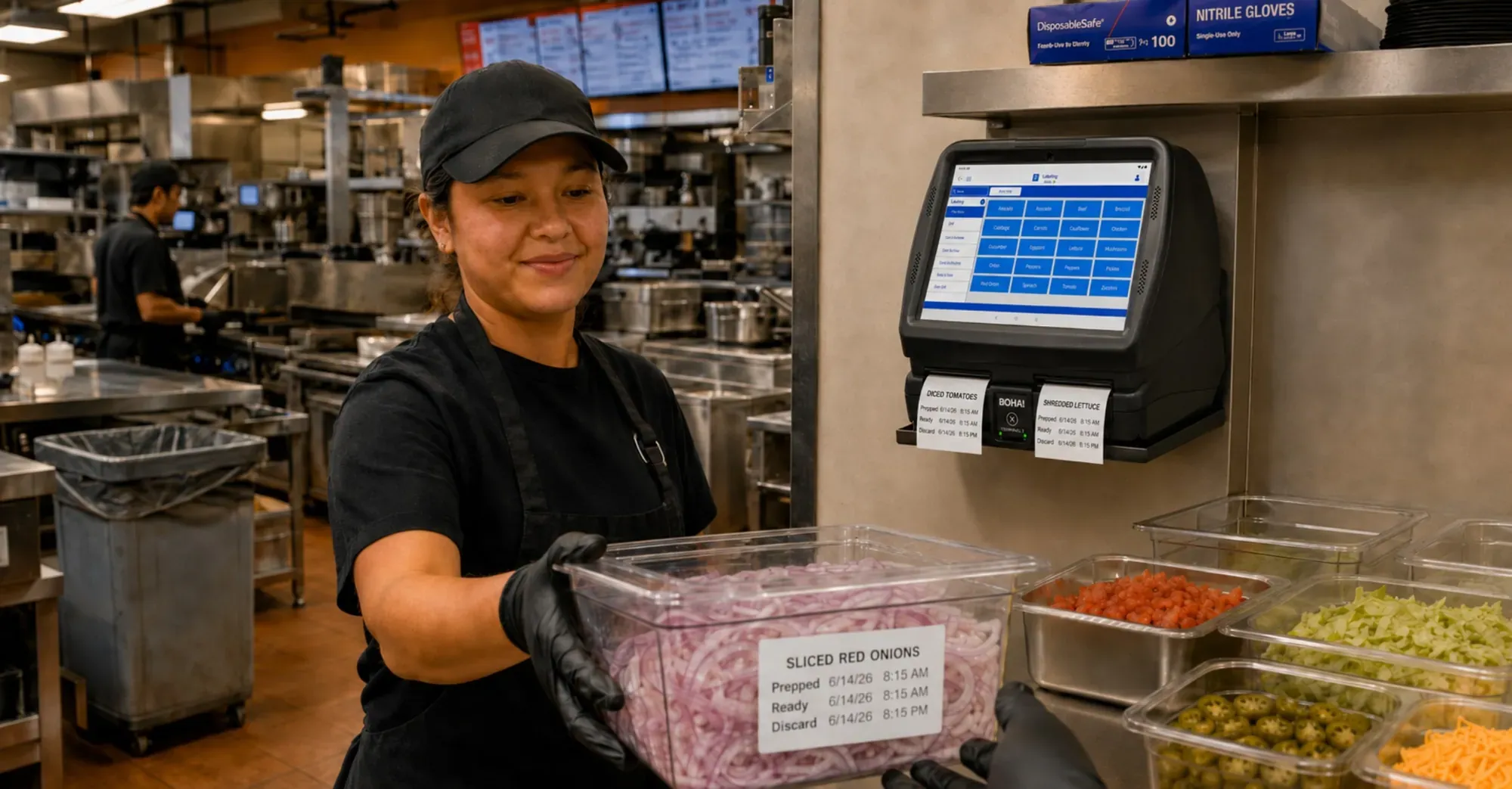
That might be a container of sliced onions leaving prep for the cooler, a pan of tomatoes moving to the service line, or a batch of grab-and-go items heading out to the case. It can also be the quieter handoff between shifts, when the next team needs to understand what was made, when it was made, and whether it is still within standard without relying on the person who prepped it.
When the label is clear, that next step is easier. The team does not have to slow down to decode handwriting, check a chart, ask who made the item, or guess whether a date refers to prep, ready, or discard time. They can use the information and keep moving.
That is the part of labeling that is easy to miss. The label may be applied at the end of one task, but it becomes part of every task that follows. It helps the person rotating inventory, stocking a station, building an order, checking a cooler, reviewing standards, or serving a customer understand what they are working with.
A good labeling workflow protects that handoff. It gives the next person enough context to act without having to reconstruct the work that happened before.
The time it takes to write or print a label is only part of the efficiency story.
The bigger issue is how much the employee has to figure out while doing it. They may need to know the correct item name, prep date, discard date, shelf-life rule, storage location, label format, or customer-facing requirement. In a simple workflow, that may be manageable. In a high-volume kitchen with many items, employees, shifts, and service models, it becomes a lot to expect from memory.
Manual labeling often puts too much of the process in the employee’s head.
That person may be prepping product, stocking a cooler, covering another station, handling a rush period, or trying to finish opening tasks before service starts. If they have to stop and interpret the labeling process every time, the workflow slows down in ways that are difficult to measure but easy to feel.
A handwritten label may be acceptable in one moment, but it creates more room for variation. One employee may write the full item name while another uses an abbreviation. One may write the discard date while another writes the prep date. Even handwriting can become part of the workflow when the next person has to decide whether the label is clear enough to trust.
None of those differences mean the team is careless. They are usually signs that the process is carrying too much local interpretation.
In a busy operation, that matters. A team should not have to slow down to decode a label before deciding what to use, move, serve, or discard.
One of the most overlooked costs of labeling is the follow-up work it creates when the label is unclear, incomplete, or inconsistent.
Rework can be as simple as stopping to fix a missing detail, rewriting a label that is hard to read, or asking a manager to confirm what something is before the team uses it. Even cooler checks take longer when labels are inconsistent enough that rotation is not obvious at a glance.
This is not always visible as a formal labor cost. It shows up in the rhythm of the shift.
It can look like a manager getting pulled into a small question that should have been solved by the process, or a team member hesitating before using a container because the date is unclear. In other cases, product gets discarded because nobody wants to risk using something that may be outside standard. Across locations, the same issue can show up as small labeling habits that drift from one site to another.
For a single site, those differences may be manageable through daily oversight. For a larger operator, they become harder to see and harder to correct.
Standardization is not about making every kitchen feel rigid. It is about giving every team the same reliable starting point so the work does not depend on who happens to be on shift.
When labeling is standardized, teams spend less time interpreting the process and more time completing the work in front of them.
Foodservice operators already think about movement all day, even if they do not always describe it that way. Product has to move through prep, employees have to move through tasks, service has to hold up during peak periods, and managers have to keep small interruptions from slowing the day down.
Labeling is part of that flow because it determines whether the next step is obvious or needs to be interpreted.
If the labeling process is slow, unclear, or disconnected from the work, it becomes another interruption. The employee has to leave the station, search for information, confirm a date, choose a format, or ask someone else what should happen next. The label eventually gets created, but the work has already been disrupted.
Efficient labeling works differently. It fits into the natural movement of the kitchen.
A prep employee should be able to identify an item, create the right label, and keep moving. A manager should be able to trust that labels follow the same standards across shifts. A team member stocking a cooler should be able to understand the label without needing background context. A district or operations leader should be able to see whether the process is being followed beyond a single site visit.
That kind of efficiency does not come from printing alone. It comes from making the labeling workflow easier to execute correctly in the middle of real kitchen work.
A faster printer helps, especially in high-volume environments. But speed at the printer is only one part of the workflow.
If the employee still has to leave the prep area, search for the right item, confirm the shelf-life rule, choose between label formats, or ask a manager which version to use, the operation has not really solved the efficiency problem. The label may print quickly, but the process around it is still slowing the team down.
Efficient labeling starts earlier than the print button.
It starts with the information behind the label: how items are organized, how shelf-life rules are maintained, how formats are selected, and how easily a team member can create the right label while the work is actually happening. A prep label, grab-and-go label, catering label, commissary label, and made-to-order label may all serve different purposes. Employees should not have to rebuild that logic every time.uild that logic every time.
A food prep labeling system for restaurants supports the way kitchen work actually happens. It helps standardize label formats, reduce manual choices during prep, and give teams a more dependable way to manage shelf life, date coding, item details, and production information.
The value is practical. When the workflow is built correctly, the employee does not need to carry every rule in memory. The manager does not need to be pulled into every small labeling question. The operation gets a more consistent process without adding more steps to the shift.
Automation can sound broad until it is tied to a specific moment in the kitchen. In labeling, the value is very practical.
If the shelf-life rule is already known, a team member should not have to calculate the discard date by hand. If a label format is tied to a specific item or use case, they should not have to remember it from training or search through a binder to confirm it.
Those small decisions may not seem like much on their own, but they compete with everything else happening in the kitchen. During a rush, even minor uncertainty can slow the team down.
Automated labeling workflows help by making the process more guided and repeatable. The employee still does the work, but the system carries more of the operational logic. That is especially useful for new employees, cross-trained staff, and teams that need to maintain consistency across dayparts and locations.
The point is not to over-engineer the kitchen. The point is to make routine work easier to do correctly.
Labeling is often discussed through a food safety lens, and for good reason. Date coding, expiration control, rotation, allergen information, and product identification all support safer execution. The FDA Food Code gives operators and regulators a model for safe food handling in retail and foodservice settings, but the day-to-day work still depends on whether teams can follow the right processes consistently.
Labeling also connects to the broader operation.
A prep label helps the next employee understand what is ready. In another part of the operation, a use-by label may guide rotation, a grab-and-go label may support customer-facing information, and a catering or commissary label may help connect production details to an order, tray, or destination location.
These are not isolated printing moments. They are small points of connection in how food moves through the business.
When labeling is disconnected from food safety workflows, prep routines, checklists, or operational systems, teams have to bridge the gaps manually. That may work when the operation is small and experienced. It becomes harder when menus change, volumes increase, staffing shifts, or more locations are added.
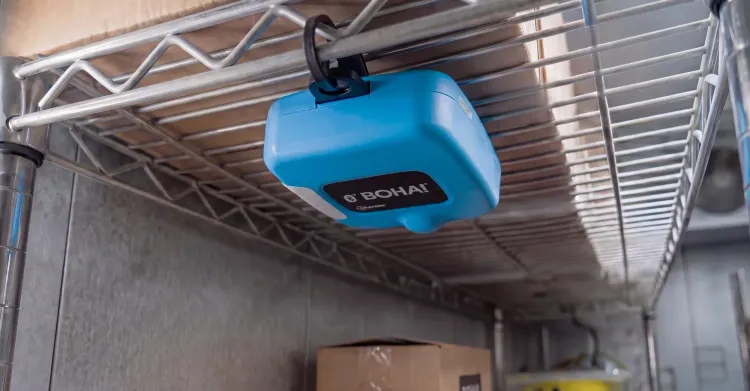
A connected back-of-house system treats labeling as part of the larger workflow. Prep, food safety, temperature monitoring, task management, production, and labeling may each serve a different purpose, but they all influence execution.
When those workflows are connected, the operation has fewer places for information to drift between prep, food safety, task management, and service.
Operators cannot improve what they cannot see.
A general manager may be able to walk a cooler and spot labeling issues in one location. A district leader, food safety manager, or operations leader cannot stand in every kitchen at once. Without better visibility, labeling problems often surface during audits, site visits, inspection prep, waste reviews, customer complaints, or manager follow-up.
By then, the operation has already absorbed the cost of the inconsistency.
For operators, the better question is whether the label reflects the right workflow: the right item, the right timing, the right information, and the right standard for that location.
One location may appear compliant while still relying on manual workarounds. Another may be labeling correctly, but only after extra steps that slow the team down. A third may have strong execution during one shift and inconsistent execution during another.
A connected food labeling system for restaurants gives operators a clearer view into how labeling is actually being used in the flow of work. That visibility helps leaders find patterns, support training, and tighten standards without depending only on periodic checks.
For multi-location foodservice operations, this is where labeling becomes a management tool. It gives leaders a better way to understand whether the process is working across the business, not just whether it looked right during the last walkthrough.
Labeling can reduce labor, but not only because labels are faster to print.
The bigger labor impact comes from reducing the extra work that tends to collect around a weak labeling process, from checking and relabeling to correcting mistakes, answering small questions, and following up after the fact. This is where lower-cost labeling choices can become more expensive than they look once the full operational cost is considered.
In a kitchen with manual or inconsistent labeling, managers often become the backup system. They answer questions about dates, verify labels, correct mistakes, and remind employees which format to use. Experienced team members can also become unofficial process owners because they know how things are supposed to be done.
That kind of dependency is fragile.
It works until the experienced person is off, a new employee is training, the menu changes, the location gets busier, or the manager is pulled into something else. Then the process becomes slower and more variable.
Standardized labeling workflows help reduce that dependency. They give employees a clearer path to follow and reduce the number of small questions that interrupt the shift.
Efficiency does not always come from one major operational change. Often, it comes from removing the same small interruption hundreds of times.
Food waste is often discussed as a purchasing, forecasting, or inventory issue. Those areas matter, but daily execution plays a major role too.
Teams make waste-related decisions based on the information in front of them. If a container is clearly labeled, easy to identify, and tied to a consistent use-by standard, the team can rotate and use product with more confidence. If the label is unclear or missing, the decision becomes more cautious.
That caution can go in either direction. A team may discard product earlier than necessary because they do not trust the date. They may also hold product longer than intended because the label does not make the standard clear enough. Both outcomes create risk for the operation.
A better labeling workflow helps protect against that uncertainty.
Expiration date labeling, shelf-life rules, item identification, and consistent formats all support better food rotation. This is especially important for fresh food programs, prepared foods, grab-and-go items, and high-volume prep environments where quality and margin are closely tied to timing.
Reducing waste is not just about throwing away less food. It is about protecting the labor, ingredients, storage, production time, and brand experience already invested in that product.
Service speed is often measured at the counter, drive-thru, pickup shelf, or point of sale. Much of that speed is built earlier in the back of house.
If product is hard to identify, prep is not staged clearly, or team members have to pause to verify dates and item details, service slows down before the customer ever sees it. The delay may not come from the label itself, but from the uncertainty around it.
Clear labeling helps the next person make a faster decision about what to use, where it belongs, and whether it is still ready for service
A team member can find the right item faster. A manager can verify readiness more easily. A service line can move with fewer questions. A grab-and-go case can be stocked with more confidence. A catering or commissary workflow can be organized with less manual checking.
For QSR, fast casual, convenience store foodservice, grocery prepared foods, and contract dining operations, back-of-house clarity has a direct relationship to execution speed.
The smoother the kitchen flow, the easier it is for the front end of the operation to stay consistent.
A single location can often get by on habit. The manager knows the team, experienced employees know the menu, and the walk-in cooler tells a familiar story.
Scaling changes that.
As more locations, employees, dayparts, and production models are added, the operation cannot rely on local memory in the same way. This is often where fresh food labeling systems start to break down, because small process differences become harder to see and harder to control across the business. Standards need to be easier to repeat. Training needs to be easier to reinforce. Leaders need to see where execution is strong and where it is drifting.
Labeling is one of the workflows where that drift becomes visible.
One location may use a slightly different naming convention. Another may handle discard dates differently. Another may be consistent during the morning shift but less reliable later in the day. These differences may seem small until the operator tries to manage them across the system.
A standardized food labeling system helps create a more consistent operating model. It gives each location the same foundation while still supporting the specific label types and workflows the business needs.
That matters for food safety, but it also matters for operational control. Leaders need confidence that the same standards are being followed whether they are looking at one location or one hundred.
Food labeling will always involve a physical label, but the real value is the workflow behind it.
The label is the visible output. The process behind it determines whether the information is accurate, consistent, timely, and easy for the team to use.
That is why modern food operations should not treat labeling as a separate back-of-house chore. It belongs in the same conversation as food safety, prep management, labor efficiency, waste control, service readiness, and multi-location visibility.
When labeling is handled manually, the operation depends heavily on memory and correction. When labeling is standardized and connected, the process becomes easier to manage and easier to repeat.
For operators trying to digitize the back of house, labeling is a practical place to start because it touches so many parts of the work. It affects the way product moves, the way employees make decisions, the way managers verify execution, and the way leaders understand consistency across locations.
Better labels are part of the value. The larger opportunity is giving kitchen teams information they can trust at the exact moments when the next step depends on it.
BOHA!® by TransAct helps foodservice operators digitize and automate back-of-house workflows, including food labeling, food safety tasks, prep execution, temperature monitoring, and operational visibility across locations.
Explore how BOHA! Labeling supports a connected back-of-house operation built for more consistent food prep, labeling, and execution across locations.
Here are a few common questions about food labeling, back-of-house efficiency, and how standardized labeling workflows support daily kitchen execution.
Food labeling improves operational efficiency by giving teams clear, consistent information about prepared foods, shelf life, use-by dates, item identification, and production details. When the labeling process is standardized, employees spend less time checking rules, rewriting labels, correcting mistakes, or asking managers to confirm what should happen next.
Manual food labeling is inefficient because it often depends on handwriting, employee memory, printed charts, spreadsheets, or local habits. Those methods create variation from person to person and location to location, which can slow down prep, make food rotation harder, and create more manager follow-up.
Operators should look for a food prep labeling system for restaurants that supports automated workflows, standardized label formats, expiration date labeling, item-level data, food safety requirements, and visibility across locations. The system should make the correct label easier to create during real back-of-house work.
Labeling helps reduce food waste by making prep dates, use-by dates, shelf-life information, and item identification easier to see and trust. When teams have clearer information, they can rotate product more consistently, avoid duplicate prep, and make better decisions about what should be used or discarded.
Labeling matters for multi-location foodservice operations because every site needs to follow the same standards consistently. A standardized labeling workflow helps reduce local variation, supports training, improves visibility, and gives operators more control over food safety, prep execution, and product consistency across locations.
Labeling fits into a digitized kitchen operation by connecting item information, prep workflows, food safety processes, expiration control, and operational data. When labeling is part of a connected back-of-house system, it supports more consistent execution and gives operators better visibility into daily food operations.
Get the latest industry insights delivered straight to your inbox
Browse