
By Tony Janega
Scraping labels off containers shouldn’t be part of the job
Dissolvable labels are rarely the first thing operators think about when evaluating efficiency. But in high-volume kitchens, small tasks like label removal can quietly shape how work actually gets done.
They are not written into SOPs or built into training, but they happen every day—across every shift, in every location—and over time they become embedded into how the workflow functions.
Scraping labels off containers is one of them.
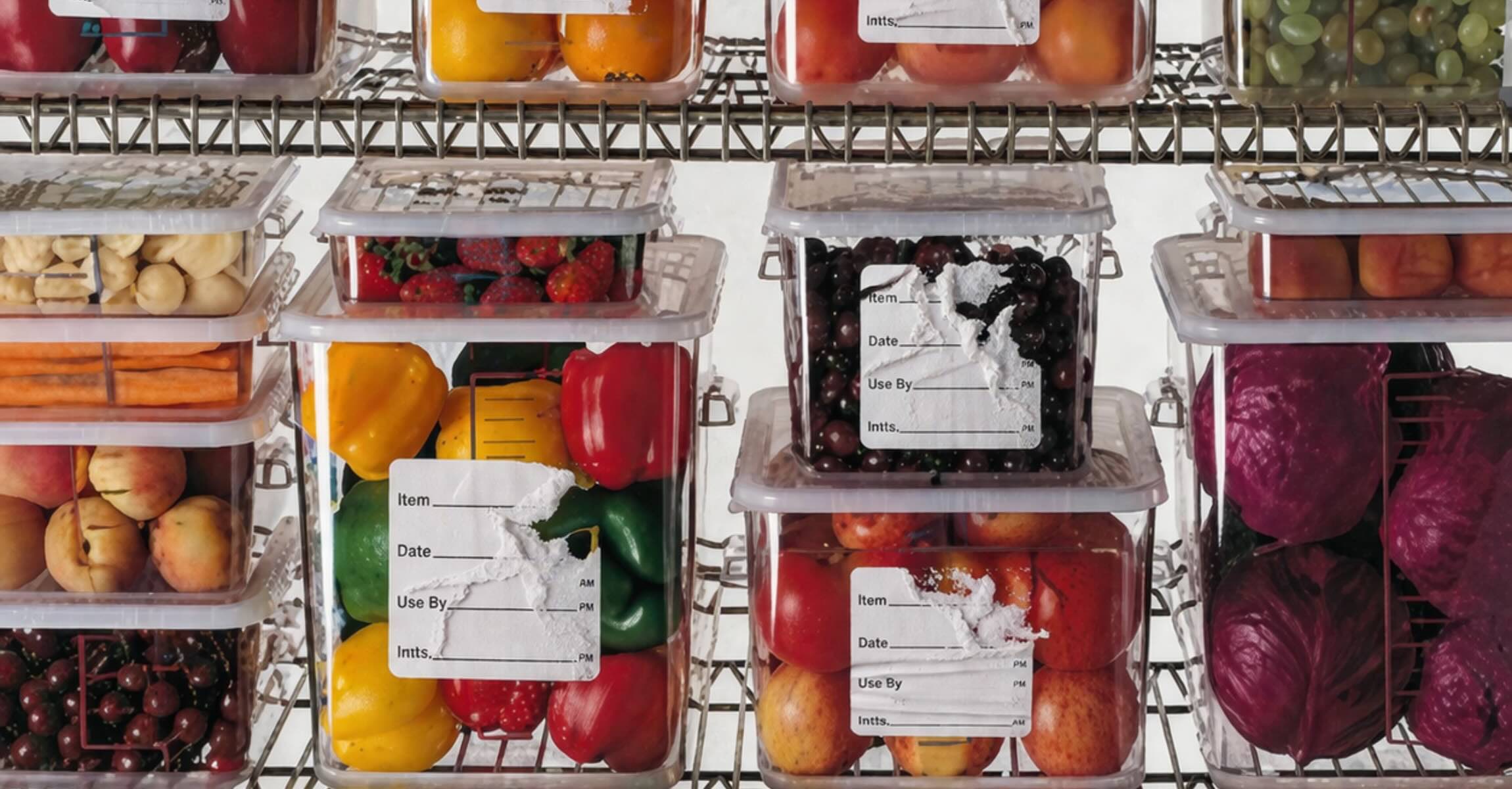
It usually shows up at the end of a task. A container needs to be reused, a label doesn’t peel cleanly, and someone ends up running it under hot water or reaching for a scraper to remove adhesive that refuses to come off. Sometimes it takes a few seconds—other times longer, but either way it interrupts the natural flow of work.
In the moment, it rarely feels like a meaningful issue. It’s simply part of the job, something teams absorb without much thought. But like most small, repeated tasks in foodservice, it doesn’t happen once—it happens constantly across prep stations, shifts, and locations. Over time, something that feels minor begins to carry operational weight in ways that are easy to overlook.
The problem isn’t the label—it’s the repetition
When operators think about labeling, the focus is usually on readability, accuracy, and food safety compliance. Those are critical components of any food labeling system for restaurants, particularly in high-volume foodservice environments where consistency and speed directly impact performance.
What tends to get overlooked is what happens after the label has already done its job.
In most kitchens, labels are not simply removed—they are worked off. Adhesive sticks, corners tear, and residue builds up, turning what should be a seamless transition between tasks into additional cleaning effort before containers can be reused.
On its own, that interruption doesn’t seem significant. But it rarely occurs in isolation.
It repeats across the day—seconds here, another minute there. Someone pauses mid-task to deal with a label that won’t come off cleanly. Another team member sets a container aside because it’s not worth slowing down the line. These adjustments are rarely formal decisions—they are small adaptations that keep work moving.
None of this shows up in reporting or performance metrics. It is not tracked as a task, so it is never optimized as one.
That is why many foodservice teams continue to treat labeling as a simple supply decision—often focusing on upfront cost—rather than recognizing the hidden cost patterns that emerge over time as part of a broader food prep labeling system for restaurants.
But even if it isn’t tracked, it still shows up in the pace of the kitchen and ultimately impacts overall kitchen workflow efficiency. Over time, it begins to shape how consistently—and how efficiently—work moves through the operation.
Where the impact actually builds
One of the reasons this issue goes largely unaddressed is that it does not present itself as a single, obvious problem. Instead, it appears in different forms depending on the situation.
Sometimes it shows up as time lost during container turnover. Other times it appears as additional cleaning effort or as hesitation during service when teams are unsure whether a container is fully clean. In some cases, it affects how equipment is used, with certain containers avoided because they are known to require more effort to maintain.
These are not formal process decisions. They are adjustments made in real time.
Over time, those adjustments become part of the workflow.
In high-volume environments, this creates a layer of operational drag that is difficult to isolate because it is distributed across so many small moments. Each instance feels insignificant, but collectively they begin to shape how work moves through the kitchen.
This is often where operational inefficiencies become embedded—not through large breakdowns, but through repeated behaviors that gradually redefine the process. Over time, this is how informal workarounds begin to define the system itself, replacing intended processes with patterns that are never formally designed but consistently executed.
The sanitation issue that doesn’t get called out
Adhesive does more than create extra work—it introduces variability into sanitation processes that are meant to be consistent.
When labels do not come off cleanly, residue builds up on containers and lids over time. In theory, every container should be thoroughly cleaned before reuse. In practice, kitchens operate under time constraints, and not every surface receives the same level of attention during every cycle.
In practice, a quick rinse can replace a full clean, and residue is often missed simply because it is not immediately visible. Sometimes containers that appear clean at a glance still carry buildup that affects long-term sanitation.
This creates a subtle but important challenge for food safety compliance, particularly in environments where maintaining consistently clean food-contact surfaces is critical under regulatory guidelines like those outlined in the FDA Food Code.
Sanitation systems are built on consistency. When adhesive interferes with that consistency, it introduces a variable that teams must manage manually.
At a single location, that may be manageable.
Across multiple locations, it becomes significantly harder to control as operations scale, especially as volume increases and operational variability begins to expand.
The cost you don’t track
There is also a physical cost associated with this process, but it is rarely attributed directly to labeling.
Containers that are scraped repeatedly do not last as long. Surfaces become worn, making them harder to clean over time. Adhesive begins to stick more aggressively with each cycle, reinforcing the issue rather than resolving it.
Eventually, containers need to be replaced more frequently.
No one logs “label adhesive” as the cause. It simply appears as part of the normal cost of doing business.
But when viewed more holistically, it becomes clear that labeling is influencing more than just what is written on a container. It is shaping how that container is handled, maintained, and cycled back into use.
This is often how small operational decisions begin to influence broader cost structures—through patterns that are not immediately visible but become measurable over time, especially when operational costs build gradually across daily workflows.
Why this gets harder to manage at scale
At a single location, teams develop ways to manage these kinds of issues. They move faster, adjust their workflow, and find informal solutions that keep operations moving.
But those workarounds do not scale consistently.
Different locations handle the same problem in different ways. Some invest more time in cleaning. Others prioritize speed. Some replace containers more frequently, while others extend their use. Over time, this creates variability across locations that should ideally be operating in a consistent manner.
That variability introduces inconsistency into workflows that are meant to be predictable. It also makes it more difficult for operators to maintain alignment across multiple units, especially when volume and complexity continue to increase.
What begins as a small, repetitive issue at the unit level becomes a system-level challenge at scale.
What dissolvable labels change
Dissolvable labels do not change the purpose of labeling. They still communicate the same information and support the same compliance and operational requirements.
What they change is what happens after.
Instead of requiring manual removal, the label dissolves completely under running water within seconds, leaving no adhesive behind. This eliminates the need for scraping, reduces cleaning effort, and removes a step from the workflow entirely.
There is no second process to manage. No additional decision about whether a container is clean enough. No interruption between tasks.
The container moves through cleaning and back into use without delay.
Improving workflow efficiency through consistency
What makes dissolvable labels effective is not just that they are easier to remove. It is that they remove a recurring interruption from a task that happens constantly.
Container turnover becomes more consistent. Teams no longer have to pause to deal with residue or adjust their workflow based on how difficult a label is to remove. The process becomes predictable, regardless of who is performing the task or where it is happening.
That predictability is what drives efficiency.
Because when a task is repeated hundreds of times a day, even small improvements begin to reshape how consistently work moves across the entire operation. The impact is not tied to one moment—it is tied to how consistently work can move without unnecessary interruptions.
A different kind of efficiency gain
When operators think about improving operational efficiency, the focus often shifts toward larger system changes. New equipment, new processes, new technologies.
Those changes can be important.
But in practice, a significant portion of efficiency is built through smaller adjustments—particularly those that remove tasks that never fully add value but still consume time and effort.
Label removal is one of those tasks.
When it is removed from the workflow, the effect is noticeable. Not because everything changes at once, but because the process becomes smoother. There are fewer pauses, fewer workarounds, and fewer decisions that slow teams down during peak periods.
That kind of improvement is subtle, but it is also highly repeatable.
And in environments where repetition defines performance, repeatable improvements tend to matter the most.
Where this fits into a modern labeling approach
For many operators, changes like dissolvable labels are part of a broader shift in how labeling is approached.
Instead of treating labeling as a fixed requirement, it becomes something that can be optimized alongside other operational systems. When labeling is connected to a broader foodservice technology platform, it becomes easier to standardize not only what information is used, but how labeling functions within the overall workflow.
When labeling is integrated into standardized labeling workflows, execution becomes more consistent and less dependent on manual adjustments or individual workarounds.
This is where labeling shifts from being a standalone task to being part of a more connected operational system.
A simple place to start
For most operators, improving efficiency does not begin with a full system overhaul. It begins with identifying where time and effort are being lost in the flow of work—especially in places that feel too small to matter.
Label removal is one of those areas.
It is rarely tracked, rarely questioned, and almost always underestimated. But when considered across an entire shift—and then across multiple locations—it becomes clear that it consumes more time and effort than expected.
That is what makes it a practical place to start.
Not because it is the largest operational issue, but because it is one of the most consistent. And when something happens that frequently, even small improvements can have a meaningful impact on overall performance.
Small changes are what scale
Not every operational improvement needs to be large to matter. In environments where efficiency is built on repetition, small changes often have the most consistent impact.
The most effective improvements are often the ones that remove repeated points of effort that do not add value to the outcome.
Dissolvable labels are one example of that.
They do not transform an operation overnight, but they remove a task that exists across every shift and every location. Over time, eliminating that task allows teams to move through their work with fewer interruptions and more consistency.
That consistency becomes more important than any single time-saving moment.
At scale, performance is not defined by isolated improvements—it is defined by how reliably systems support execution across the entire operation, day after day, across every location.